
Concern-curated nutrition
Dry fruits for diabetes-mindful eating
An editorial guide to glycemic-aware nut and dried-fruit choices, the nutrient evidence behind them, and how customers managing blood sugar most often use them. Not medical advice.
FSSAI Lic. 10020011007944
Crafted since 1939, Delhi
5M+ Indian families served
View curated picks
Editorial nutrition guidance, not medical advice. Please consult your treating physician or registered dietitian about how dry fruits fit your specific care plan.

Managing blood sugar reshapes a pantry. Every snack, every dessert substitute, every handful of mixed nuts has to be weighed against a single question: how much will this push the glucose curve, and for how long? Dry fruits sit in an uncomfortable middle ground for people managing diabetes — nutritionally dense, often portion-controllable, but with a wide range of glycemic impact depending on which fruit and which nut.
Three variables decide that impact: glycemic index (GI) — how fast a food's carbohydrate reaches the bloodstream; fibre and protein in the same bite — which slow that absorption; and the broader micronutrient profile — magnesium, monounsaturated fats, plant proteins — that supports normal insulin function in dietary research.
Among dry fruits, almonds, walnuts and pistachios sit at the low end of the GI scale. Raisins and dates sit considerably higher. They are not excluded from a diabetes-mindful pantry, but portion control becomes the variable that matters — a small closed handful, 15–20 grams, is the per-occasion ceiling that most clinical dietitians suggest.
Source: USDA FoodData Central; Atkinson FS et al., International Tables of Glycemic Index, 2008; ICMR-NIN Reference Tables, 2024. Brand variation applies.
This is the kind of question the team at Sindhi Dry Fruits has answered across a counter since 1939 — three generations of the same family, an estimated one million Indian kitchens, and a customer book that runs from Apollo Hospital purchase orders to parents working out a soaked-almond morning. A meaningful share of that work, behind the scenes, has been about which specific batches and origins suit which kind of customer. Diabetes-mindful eaters are the largest single segment of that conversation.
Why the brand variable matters
What 85 years of supplying 5M+ Indian families has taught us
Diabetes is precision work. Sugar content, glycemic index, contamination, sulphur-dioxide residues on dried fruit, oil rancidity in nuts — every variable matters. Eighty-five years of supplying around a million households, many with members managing diabetes, hypertension, pregnancy nutrition or post-operative recovery, has taught us to take those variables out of your equation, so you can focus on the dietary one.
Single-origin sourcing
California almonds, Kashmir walnuts, Iranian pistachios — traceable to grower co-ops.
Hand-sorted and quality-checked per batch
Hand-sorted and quality-checked at our ISO 22000:2018 certified facility before our shelves.
Unsulphured by default
Sun-dried or oven-dried. No sulphur-dioxide preservatives in our dried fruits.
Nitrogen-flushed and sealed
Nitrogen-flushed packaging prevents nut-oil rancidity and preserves freshness from seal to table.
DIABETES-MINDFUL PICKS
Picks for Diabetes-Mindful Eating
Portion-friendly dry fruits and nuts, tagged for diabetes-mindful eating

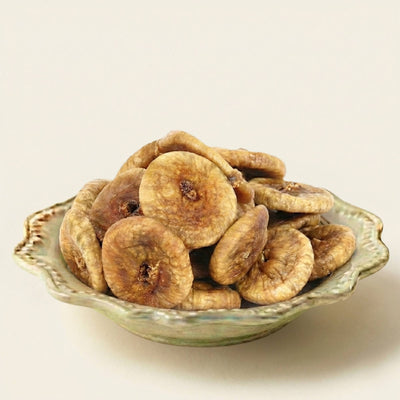
Anjeer Super Jumbo, Dried Figs, Iranian – Naturally Fibre-RichSave ₹ 320.00
⚠ Delayed
₹ 570.00₹ 890.00


Brazil



The nutrient picture
What you are actually choosing for
Each card below names a nutrient relevant to this concern, what it does in the body per established research, and which of our dry fruits carry it. Not therapeutic claims — nutrient facts.
Magnesium
Mg
Mineral involved in over 300 enzymatic reactions, including those that support normal insulin signalling per dietary research.
Found in
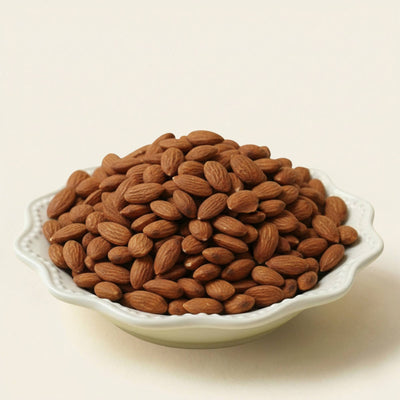
Almonds — 270 mg / 100g
Adult RDA
340 mg / day (men), 310 mg (women)
ICMR-NIN Nutrient Requirements 2020; USDA FoodData Central.
Vitamin E
Tocopherol
Antioxidant nutrient. Defends cell membranes against oxidative stress in dietary research.
Found in
Almonds — 25.6 mg / 100g
Adult RDA
10 mg / day (ICMR-NIN)
ICMR-NIN Nutrient Requirements 2020; USDA FoodData Central.
Dietary fibre
Soluble + insoluble
Slows the rate at which carbohydrate-bound glucose enters the bloodstream when consumed alongside a meal, per established dietary research.
Found in
Almonds — 12.5 g / 100g
Adult AI
40 g / day (ICMR-NIN)
ICMR-NIN Nutrient Requirements 2020.
Source: USDA FoodData Central, 2024. Values per 30g serving — typical, brand variation applies.
What our customers typically choose
A common daily pattern we see in our K-14 Lajpat Nagar customer base: 10–12 soaked almonds with breakfast, 4–5 walnut halves mid-afternoon, and an unsweetened fig as the occasional dessert substitute. Names withheld for privacy; pattern reflects in-store and order-history observation.
Aggregated, anonymous observation from our K-14 Lajpat Nagar shopfloor and order history. Not testimony from named individuals.
Frequently asked questions
What people ask before they buy
Honest, nutrient-first answers. We do not make therapeutic claims; we share dietary facts and serving guidance.
Are dry fruits suitable for someone managing diabetes?
Most tree nuts — almonds, walnuts, pistachios, cashews — are low on the glycemic index (GI 15–32) and contain fibre, protein, and unsaturated fats that slow the rate at which carbohydrate-bound glucose enters the bloodstream when consumed alongside a meal. Dried fruits like raisins and dates are higher GI and should be portioned more carefully. For personalised guidance, please consult your doctor or registered dietitian.
Which dry fruits have the lowest glycemic load for blood-sugar-conscious eating?
By published GI values: almonds (15), walnuts (15), pistachios (28), and cashews (32) are the lowest among commonly available varieties. Macadamias, pecans, and Brazil nuts also fall in the low-GI band. Dates (GI 70), raisins (GI 64), and dried apricots (GI 35) carry more sugar and are best treated as occasional rather than daily.
How many grams of dry fruits per day is reasonable?
ICMR-NIN dietary guidelines suggest around 30g/day of nuts and oilseeds for an average adult — roughly a small handful. We recommend splitting that across the day rather than eating it in one sitting. Individual energy and macronutrient needs vary; speak with your doctor or dietitian for guidance specific to you.
Are dates and raisins okay if I'm watching my blood sugar?
Both are nutritious but carry significantly more sugar per 100g than nuts. If you enjoy them, treat them as a small portion (5–10g) consumed alongside a protein or fat source — for example, two dates with a few walnuts — to slow the absorption rate. Avoid eating dried fruit on an empty stomach if you are glucose-conscious.
Should I soak almonds before eating them?
Soaking is a long-standing Indian household practice, partly cultural and partly digestive. Soaking softens the skin (which contains tannins that some find harder to digest) and can make the nut feel more palatable. From a nutrient standpoint, USDA values do not change meaningfully with soaking. Eat them whichever way you prefer.
Are roasted or salted nuts okay for someone with high blood pressure or diabetes?
Plain roasting (no salt added) does not change the nutritional profile meaningfully. Salted nuts add 200–360mg sodium per 100g — roughly 10–18% of the WHO upper daily limit (2g sodium / 5g salt) per 100g. Our default is unsalted; salted variants are clearly labelled. For BP-mindful eating, we suggest the unsalted line.
What is the best time of day to eat nuts if I am diabetes-mindful?
Distributing across the day generally serves better than a single large portion. A common pattern: a small handful with breakfast or as a mid-morning snack with a glass of water, a few alongside lunch as a fibre/protein boost, and the remainder as an evening pre-dinner nibble. The goal is steady fat-and-fibre intake throughout the day rather than a sugar spike.
Do you sell unsulphured dried fruits?
Yes — unsulphured is our default. Most apricots and other golden-coloured dried fruits in the wider market are treated with sulphur dioxide (a preservative that keeps the fruit looking bright). Our unsulphured line uses sun-dried fruit; the colour will be darker and more natural. Look for the 'unsulphured' label on the product page.
Where do you source from and what is your quality control process?
We have been sourcing dry fruits since 1939 and currently serve 5M+ Indian families through our K-14 Lajpat Nagar shopfloor. Sourcing is single-origin where possible (Mamra almonds from Iran, Mevawala kishmish from Afghanistan, Anjeer from Turkey). Each batch is quality-checked in our FSSAI-licensed facility for moisture, aflatoxin, and microbial counts, then nitrogen-flushed and sealed within 48 hours of arrival to preserve nutrient density.
Sources
Where the numbers on this page come from
Every nutrient figure and reference daily allowance on this page is drawn from established food-science and government nutrition databases. We do not invent numbers.
- ICMR-NIN. Nutrient Requirements for Indians, A Report of the Expert Group, 2020. View report
- USDA FoodData Central. USDA FoodData Central — nutrient composition database (vitamin E, ALA, selenium and mineral content per 100g) View USDA FoodData Central
- Atkinson FS, Foster-Powell K, Brand-Miller JC.. International Tables of Glycemic Index and Glycemic Load Values: 2008. Diabetes Care 31(12):2281–83. View paper
- WHO. Healthy Diet — Fact sheet on dietary recommendations for nuts, sugar and sodium intake. View fact sheet
- ICMR. Dietary Guidelines for Indians — A Manual (revised edition). View manual
- FSSAI. Food Safety and Standards (Advertising and Claims) Regulations, 2018 — framework for permissible nutrient and dietary claims. View regulations
- Viguiliouk E et al.. Effect of tree nuts on glycemic control in diabetes: a systematic review and meta-analysis. PLOS ONE 9(7):e103376, 2014. View paper