
SKIN AND BEAUTY NUTRITION
Vitamin E, biotin and the dry fruits your dermatologist eats
Almonds for vitamin E, walnuts for omega-3, Brazil nuts for selenium. A nutrient-first guide to the dry fruits commonly cited in skin and hair nutrition research.
FSSAI लाइसेंस 10020011007944
1939 से निर्मित, दिल्ली
50 लाख से ज़्यादा भारतीय परिवारों को सेवाएँ दी गईं
चुने गए विकल्प देखें
This page shares dietary nutrient facts. Skin conditions — acne, eczema, psoriasis — are clinical issues that deserve dermatological consultation. Dietary improvements are supportive, not curative.
Skin health depends on cellular turnover, collagen integrity, hydration, and protection from oxidative damage. Dietary factors that show up consistently in dermatological nutrition research: antioxidant intake (vitamins A, C, E), omega-3 fatty acids, biotin, and trace minerals like selenium and zinc.
Vitamin E is the principal lipid-soluble antioxidant in skin cell membranes — it defends membrane lipids against oxidative damage per dietary research. Almonds carry 25.6mg vitamin E per 100g, the densest dry-fruit source. Walnuts add omega-3 (ALA), which contributes to cell membrane fluidity. Brazil nuts deliver selenium (1917 mcg per 100g), a trace mineral relevant to antioxidant enzyme function.
USDA: almonds — 25.6mg vitamin E per 100g; walnuts — 9.1g ALA per 100g; Brazil nuts — 1917 mcg selenium per 100g (the densest natural source). ICMR-NIN: adult vitamin E RDA is 10mg/day; selenium is 40 mcg/day. ONE Brazil nut typically delivers full daily selenium — do not over-eat them.
स्रोत: यूएसडीए फ़ूडडेटा सेंट्रल, 2024।
Since 1939, the dry fruits Indian households have eaten for clear skin and healthy hair have largely been almonds, walnuts and (more recently) Brazil nuts. Across approximately 1 million Delhi families, this combination is what our shopfloor staff consistently recommend when customers ask about beauty-mindful eating.
ब्रांड वेरिएबल क्यों मायने रखता है
50 लाख से ज़्यादा भारतीय परिवारों को 85 सालों से सेवा प्रदान करने के बाद हमने यह सीखा है
Beauty-mindful eating is mostly about preserving fragile fats and antioxidants. Vitamin E is fat-soluble and oxidises with the surrounding oil. Our vacuum-nitrogen seal and dark-line packaging exist to protect that nutrient profile.
एकल-स्रोत खरीद
कैलिफोर्निया बादाम, कश्मीर अखरोट, ईरानी पिस्ता - उत्पादक सहकारी समितियों से पता लगाने योग्य।
हर बैच को हाथ से छांटा गया और उसकी गुणवत्ता जांची गई
हमारे शेल्फ में आने से पहले, हमारी ISO 22000:2018 प्रमाणित सुविधा में हाथ से छांटा और गुणवत्ता की जांच की गई।
डिफ़ॉल्ट रूप से अनसल्फराइज्ड
धूप में सुखाए गए या ओवन में सुखाए गए। हमारे सूखे मेवों में कोई सल्फर-डाइऑक्साइड संरक्षक नहीं है।
नाइट्रोजन-युक्त और सीलबंद
नाइट्रोजन-फ्लश पैकेजिंग अखरोट-तेल को बासी होने से रोकती है और सील होने से लेकर खाने तक उसकी ताज़गी बनाए रखती है।
SKIN & BEAUTY PICKS
Picks for Skin and Beauty Nutrition
Rich in vitamin E and biotin, tagged for skin and beauty nutrition


बादाम मामरा जंबो, सिंगल-ओरिजिन ईरानी मामरा – विटामिन E से भरपूरबचत करें ₹ 405.00
⚠ देरी से
₹ 1,215.00₹ 1,620.00

बादाम मामरा, सिंगल-ओरिजिन ईरानी मामरा – विटामिन ई से भरपूरबचत करें ₹ 660.00
⚠ देरी से
₹ 960.00₹ 1,620.00


Brazil

कैलिफ़ोर्निया, संयुक्त राज्य अमेरिका
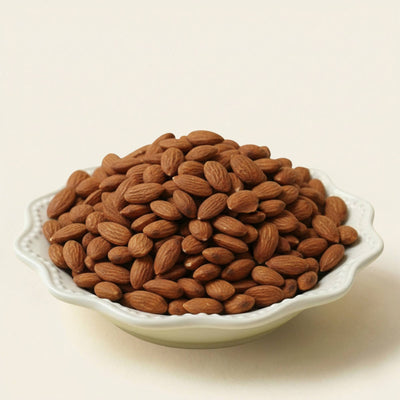
कैलिफ़ोर्निया बादाम, बादाम अमेरिकन, यूएसए - विटामिन ई से भरपूरबचत करें ₹ 55.00
⚠ देरी से
₹ 305.00₹ 360.00

पोषक तत्वों की तस्वीर
आप वास्तव में क्या चुन रहे हैं
नीचे दिया गया प्रत्येक कार्ड एक पोषक तत्व का नाम बताता है जो इस चिंता से संबंधित है, स्थापित शोध के अनुसार यह शरीर में क्या करता है, और हमारे कौन से सूखे मेवे इसे धारण करते हैं। चिकित्सीय दावे नहीं—पोषक तत्वों के तथ्य।
Vitamin E
Tocopherol
A fat-soluble antioxidant that helps protect cell membranes from oxidative damage. Dietary research associates it with skin cell health and with membrane integrity in musculoskeletal tissue.
Found in
Almonds — 25.6mg vitamin E/100g (densest dry-fruit source)
Adult RDA
10mg/day (ICMR-NIN adult RDA)
ICMR-NIN; USDA FoodData Central
Omega-3 (ALA) — Walnuts
Alpha-linolenic acid
A plant-based omega-3 fatty acid. Dietary research associates ALA with cell membrane fluidity, relevant to skin cells, and with anti-inflammatory precursor compounds relevant to joint comfort.
Found in
Walnuts — 9.1g ALA/100g; omega-3:omega-6 ratio ~1:4.2
Adult RDA
No specific ICMR-NIN RDA for ALA; general guidance is 30g/day of nuts and oilseeds
USDA FoodData Central; ICMR-NIN
Selenium
Se
A trace mineral involved in antioxidant enzyme function in dietary research, relevant to skin health.
Found in
Brazil nuts — 1,917mcg selenium/100g (densest natural source)
Adult RDA
40mcg/day (ICMR-NIN adult RDA); one Brazil nut typically covers this, limit to 1-2/day
ICMR-NIN; USDA FoodData Central
Source: USDA FoodData Central, 2024. Values per 30g serving.
जो आमतौर पर हमारे ग्राहक चुनते हैं
Customers buying with skin and hair in mind typically pick a small bundle: 500g raw almonds, 250g walnuts, 100g Brazil nuts. The Brazil nuts go furthest — 1 or 2 a day is enough for full selenium intake.
लाजपत नगर में हमारी K-14 दुकान के कर्मचारियों और ऑर्डर हिस्ट्री से मिली समग्र, अनाम जानकारी। यह किसी व्यक्ति विशेष की गवाही नहीं है।
लोग इनका असल में इस्तेमाल कैसे करते हैं?
सुझाई गई दैनिक दिनचर्या
पोर्शन संबंधी मार्गदर्शन, न कि चिकित्सकीय निर्देश। नीचे दिए गए तीन टाइल दिखाते हैं कि इस समस्या का सामना करने वाले हमारे ग्राहक सबसे ज़्यादा कब खाते हैं—आपके अपने चिकित्सक को पता होगा कि इसे आपके अनुसार कैसे समायोजित किया जाए।
सुबह
नाश्ते के साथ
5–6 soaked almonds, peeled (a long-standing North Indian morning ritual). Vitamin E content is unchanged; the peel removal is purely a digestive-comfort preference.
दोपहर ढले
शाम 4 बजे का विराम
1–2 Brazil nuts mid-day. ONE Brazil nut delivers full daily selenium intake. Treat them as a daily micro-dose, not a regular snack.
शाम
मिठाई का विकल्प
A few walnut halves with dinner for ALA — the plant omega-3 relevant to skin cell membrane fluidity in dietary research.
नट्स और सूखे मेवों के लिए आई.सी.एम.आर.-एन.आई.एन. के भाग संबंधी दिशानिर्देशों के आधार पर सांकेतिक विभाजन। व्यक्तिगत ज़रूरतें ऊर्जा व्यय और चिकित्सक की सलाह के अनुसार अलग-अलग होती हैं।
ये अवलोकन संबंधी पैटर्न और आहार संबंधी सुझाव हैं, न कि चिकित्सीय निर्देश। व्यक्तिगत मार्गदर्शन के लिए अपने चिकित्सक या आहार विशेषज्ञ से परामर्श करें।
अक्सर पूछे जाने वाले प्रश्न
लोग खरीदने से पहले क्या पूछते हैं
ईमानदार, पोषक तत्वों को प्राथमिकता देने वाले जवाब। हम चिकित्सीय दावे नहीं करते; हम आहार संबंधी तथ्य और सेवन संबंधी मार्गदर्शन साझा करते हैं।
Should I soak almonds before eating them?
Soaking is a long-standing Indian household practice, partly cultural and partly digestive. Soaking softens the skin (which contains tannins that some find harder to digest) and can make the nut feel more palatable. From a nutrient standpoint, USDA values do not change meaningfully with soaking. Eat them whichever way you prefer.
Do you sell unsulphured dried fruits?
Yes — unsulphured is our default. Most apricots and other golden-coloured dried fruits in the wider market are treated with sulphur dioxide (a preservative that keeps the fruit looking bright). Our unsulphured line uses sun-dried fruit; the colour will be darker and more natural. Look for the 'unsulphured' label on the product page.
Where do you source from and what is your quality control process?
We have been sourcing dry fruits since 1939 and currently serve 5M+ Indian families through our K-14 Lajpat Nagar shopfloor. Sourcing is single-origin where possible (Mamra almonds from Iran, Mevawala kishmish from Afghanistan, Anjeer from Turkey). Each batch is quality-checked in our FSSAI-licensed facility for moisture, aflatoxin, and microbial counts, then nitrogen-flushed and sealed within 48 hours of arrival to preserve nutrient density.
Can eating almonds, walnuts and Brazil nuts actually help my skin and hair?
Dietary research links several nutrients in these nuts to skin health: vitamin E (almonds) acts as an antioxidant in skin cell membranes, omega-3 ALA (walnuts) supports membrane fluidity, and selenium (Brazil nuts) plays a role in antioxidant enzyme function. These are supportive dietary factors, not treatments for skin conditions like acne or eczema. For personalised guidance, please consult a dermatologist or registered dietitian.
Which dry fruit has the most vitamin E?
Almonds are the densest dry-fruit source of vitamin E, carrying about 25.6mg per 100g, well above the ICMR-NIN adult RDA of 10mg/day. A 30g handful provides roughly 7.7mg, a meaningful contribution within a varied diet. Vitamin E is fat-soluble, so eating almonds whole (rather than as an isolated extract) lets their natural fat carry the nutrient efficiently.
How many Brazil nuts should I eat for selenium?
Brazil nuts are the densest natural source of selenium, at roughly 1,917mcg per 100g, against an ICMR-NIN adult RDA of just 40mcg/day. One Brazil nut typically covers a full day's selenium needs on its own. Capping intake at 1-2 a day is advisable: more doesn't add benefit, and higher amounts push selenium well past the recommended daily level.
What does walnut omega-3 add that almonds and Brazil nuts don't?
Walnuts are a plant-based source of ALA, an omega-3 fatty acid, at about 9.1g per 100g. Dietary research links ALA to cell membrane fluidity, relevant to skin cells alongside the antioxidant roles that vitamin E and selenium play. Almonds and Brazil nuts don't meaningfully contribute omega-3, so the three nuts work together rather than substitute for one another.
Is there a good daily pattern for eating these nuts for skin and hair?
A pattern many of our customers use: a small handful of soaked almonds in the morning, 1-2 Brazil nuts around midday, and a few walnut halves with dinner. Spreading the three nutrients (vitamin E, selenium, omega-3) across the day, rather than all at once, is a simple way to build the habit without overdoing any single one.
सूत्रों के अनुसार
इस पेज पर मौजूद संख्याएँ कहाँ से आती हैं
इस पृष्ठ पर प्रत्येक पोषक तत्व का आंकड़ा और संदर्भ दैनिक भत्ता स्थापित खाद्य-विज्ञान और सरकारी पोषण डेटाबेस से लिया गया है। हम संख्याएँ नहीं बनाते हैं।
- ICMR-NIN. ICMR-National Institute of Nutrition — Dietary Guidelines for Indians and nutrient requirement (RDA) tables View ICMR-NIN
- USDA FoodData Central. USDA FoodData Central — nutrient composition database (vitamin E, ALA, selenium and mineral content per 100g) View USDA FoodData Central