Kishmish Varieties Compared: Kandhari, Lambi, Black & Premium

Nutrition & Wellness

Kishmish Varieties Compared: Kandhari, Lambi, Black & Premium

Kandhari kishmish, Indian lambi, black raisins, or premium seedless — learn what sets each apart and which kishmish variety suits your kitchen.

4 min read Sindhi Dry Fruits Editorial 1 Nov 2026
~750mg Potassium per 100g — a meaningful amount in a small daily handful of kishmish
4 types of kishmish sold here — each with a different origin, taste and best use
20–30g suggested daily serving — roughly one to two tablespoons, easy to work into any meal
6+ months typical shelf life in a sealed, cool container

The Findings

What the data actually shows

4 types
Kandhari, Lambi, Black & Premium — what is actually different

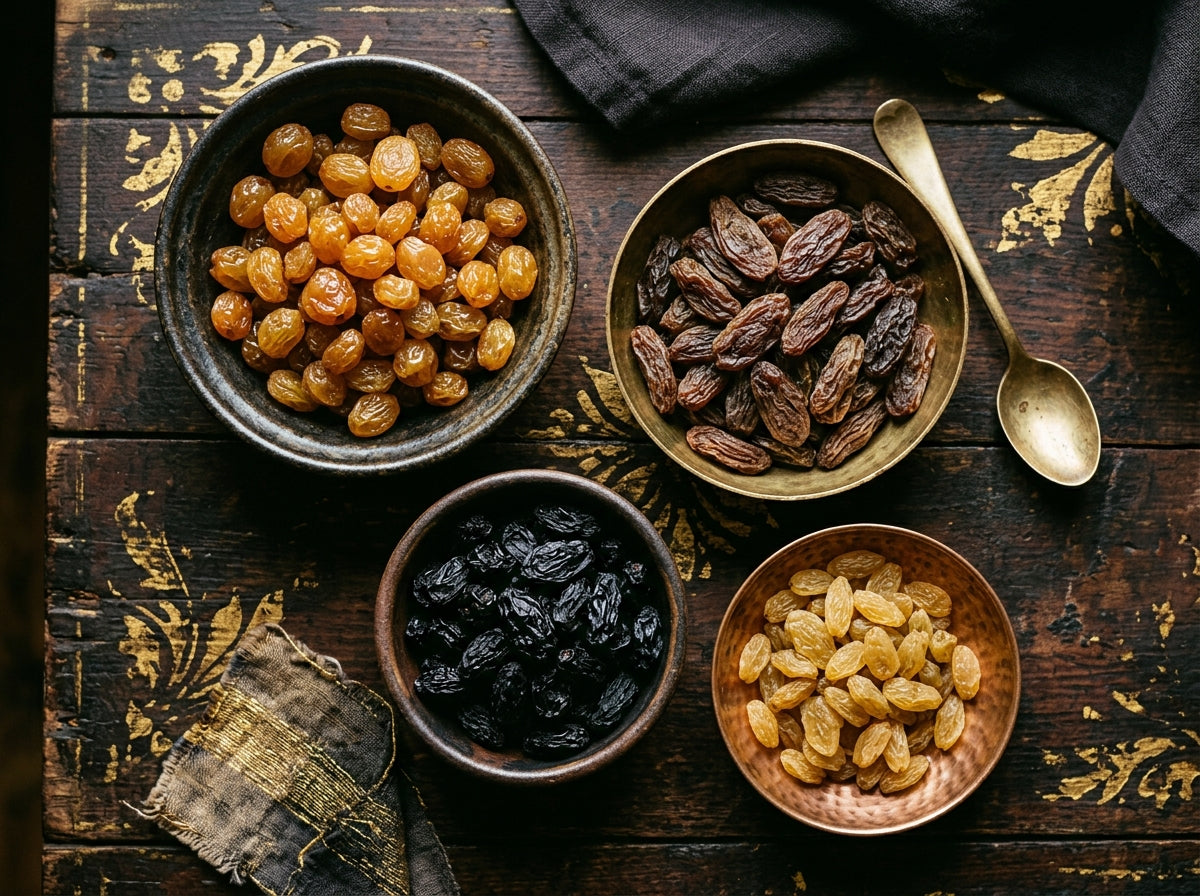
Kishmish Kandhari (Afghan) is round, plump, and noticeably sweeter — the premium everyday choice and a popular kishmish variety in India. Indian Lambi is the elongated domestic variety, drier and milder, good for cooking. Black raisins (Kali Kishmish) come from darker grape varieties with a slightly deeper, earthier flavour. Premium Seedless Kishmish is graded and cleaned for consistent quality, with a softer texture and less skin toughness.

Plant iron source
Raisins contribute a useful amount of non-haem iron

Raisins offer a useful and convenient plant-based source of iron — a 40g serving provides roughly 0.75mg of non-haem iron (the plant form). Non-haem iron is less readily absorbed than iron from meat, but pairing kishmish with a vitamin C source — a piece of amla, a squeeze of lemon — may improve absorption. This is one reason raisins appear in many traditional Indian diets as an easy everyday iron contributor. Source: USDA FDC #168165

~750mg potassium
A generous source of potassium for a small dried fruit

Drying removes water and concentrates minerals — at around 750mg per 100g, raisins carry more potassium by weight than most fresh fruits. Potassium is associated with healthy blood pressure levels and normal heart rhythm in the broader diet context. A 40g serving adds about 300mg — a small but real contribution toward the 3,500mg daily intake recommended by ICMR-NIN 2020 for Indian adults. Source: USDA FDC #168165

Sweet vs Tart
Which kishmish works best for cooking versus snacking

For cooking in kheer, halwa, pulao, or biryani — Indian Lambi and Kandhari both work well. Kandhari adds a sweeter note. For snacking and trail mix, premium seedless or Kandhari are the better choice because of their softer bite. Black raisins (Kali Kishmish) have a slightly tartier edge that suits savoury dishes. The nutritional profile is broadly comparable across all four types — the difference is taste, texture, and origin.

20–30g daily
How much kishmish to eat — one small handful

About 20 to 30g per day — roughly one to two tablespoons — is a sensible daily amount. Raisins are naturally sugar-dense, so a little goes a long way. Mix them into morning oats, stir into kheer, add to a trail mix, or eat a small handful as an afternoon snack in place of something fried. If you have diabetes or are managing blood sugar levels, speak with your doctor about the right amount for you.

6–12 months
Storing kishmish: how to keep them soft and fresh

Raisins have low moisture content, so they keep well at room temperature in a sealed, airtight container for 6 months or more. The fridge extends shelf life further — up to a year. If they harden over time, soak briefly in warm water (5–10 minutes) to restore softness. Signs of spoilage are an off smell, visible mould, or a fermented odour. Keep them away from heat and direct light, which accelerates hardening and colour change.

Shop This Article

The products behind these numbers

Featured
Kishmish Kandhari Afghan raisins, sweet and naturally seedless

Kishmish Kandhari, Afghan – Iron-Rich

250g

₹ 430.00₹ 315.00
Kishmish Indian Lambi long raisins, naturally iron-rich dry fruit

Kishmish Indian Lambi – Iron-Rich

250g

₹ 295.00₹ 170.00
Sindhi Dry Fruits Black Raisins (Kali Kishmish) pack front, iron-rich dried black grapes

Black Raisins, Kali Kishmish, Indian – Iron-Rich

250g

₹ 180.00₹ 170.00
Premium kishmish pack front view – soft seedless raisins, naturally sweet

Premium Kishmish – Soft Seedless Raisins, Naturally Sweet & Chewy

250g

₹ 275.00₹ 265.00

Nutrition

What the Numbers Say

✦ AI-Assisted Content
Iron (non-haem) ~0.75mg per 40g 4% DV
Potassium ~300mg per 40g 9% DV
Total Sugars ~26g per 40g
Dietary Fibre ~1.8g per 40g 6% DV
Copper ~0.12mg per 40g 13% DV
Calcium ~25mg per 40g 2% DV

Nutritional values are approximate. Source: NIN/ICMR. AI-assisted content — verify with a registered nutritionist before acting on this information.

Frequently Asked Questions

What is the difference between Kandhari kishmish and Indian lambi?

Kishmish Kandhari comes from Afghanistan and is rounder, plumper, and noticeably sweeter than Indian lambi. It tends to have a softer, juicier bite. Indian Lambi is the elongated domestic variety, slightly drier, less sweet, and widely used as a cooking ingredient in kheer, biryani, and halwa. Both have similar nutritional profiles; the choice is mainly about taste, texture and use.

How much kishmish should I eat in a day?

About 20 to 30g — roughly one to two tablespoons — is a sensible daily amount for most healthy adults. Raisins are naturally high in sugars, so larger portions add up in calories quickly. Adding them to oats, yogurt, or a trail mix is an easy way to include them. People managing blood sugar levels should be mindful of portion size and consult their doctor about the right amount for their diet.

Are black raisins healthier than regular kishmish?

Black raisins (Kali Kishmish) come from darker grape varieties and have a slightly different flavour, but their nutritional profile is broadly comparable to regular green or golden raisins per published data. Both are iron-contributing, potassium-containing dried fruits. The difference between them is mainly in taste, colour, and how they perform in recipes — not a meaningfully different nutritional outcome.

How do I keep kishmish soft after opening the packet?

Store kishmish in an airtight container away from heat and direct sunlight. At room temperature they last 6 months or more if sealed. If they harden, soak them in warm water for 5 to 10 minutes and they will soften again. The fridge keeps them soft for longer and extends shelf life to around a year. Leaving the packet open is the fastest way to get hard, dry raisins.

Sources

  1. USDA FoodData Central, FDC ID #168165 — Raisins, seedless. Nutrient values per 100g; serving calculations scaled to 40g. Available at: fdc.nal.usda.gov.
  2. Indian Council of Medical Research – National Institute of Nutrition (ICMR-NIN). Nutritive Value of Indian Foods, 2020. National Institute of Nutrition, Hyderabad.

Not medical advice — consult a healthcare professional for personal health decisions. Figures reflect one 40g serving (approximately 2 tablespoons) unless noted.

Where to Find Premium Dry Fruits Near You

Since 1939, Sindhi Dry Fruits has been supplying premium cashews, almonds, walnuts, pistachios and seasonal dry fruits to homes across Delhi, Mumbai, Bangalore and beyond. Order online with fast dispatch to Delhi NCR and pan-India delivery.

Shop Premium Dry Fruits →