
Nutrition & Wellness
Types of Almonds in India: California, Mamra & Gurbandi Compared
California, Mamra, Gurbandi, Indian — each almond type has a different taste, nutrition and best use. Discover the right badam variety for your family today.
Shop This Article
The products behind these numbers
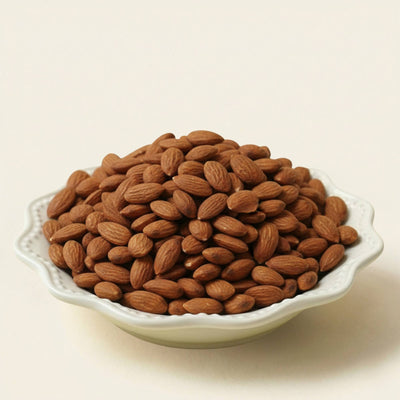
कैलिफ़ोर्निया बादाम, बादाम अमेरिकन, यूएसए - विटामिन ई से भरपूर
250 ग्राम

बादाम मामरा जंबो, सिंगल-ओरिजिन ईरानी मामरा – विटामिन E से भरपूर
250 ग्राम

बादाम गुरबंदी
250 ग्राम
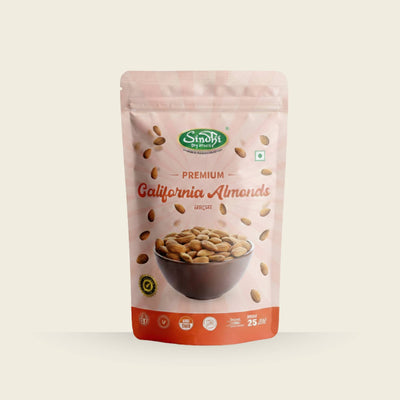
प्रीमियम बादाम – ताज़ा कुरकुरा बादाम, पोषक तत्वों से भरपूर कैलिफ़ोर्निया किस्म
250 ग्राम
Nutrition
What the Numbers Say
Nutritional values are approximate. Source: NIN/ICMR. AI-assisted content — verify with a registered nutritionist before acting on this information.
Frequently Asked Questions
What is the difference between California almonds, Mamra almonds and Gurbandi almonds?
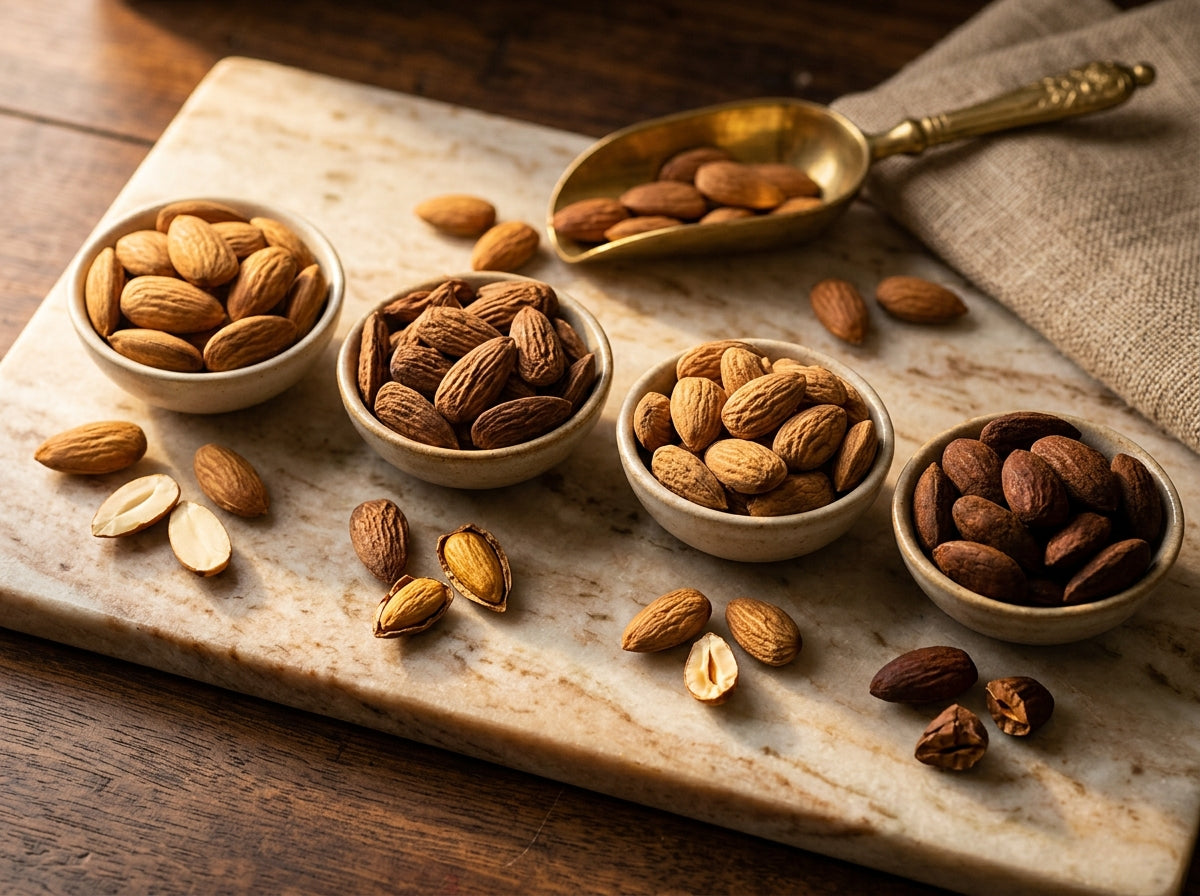
California almonds (American Badam) are large, oval and mild in flavour — the most commonly available type, great for daily snacking and cooking. Mamra almonds (Irani Mamra) are smaller, wrinkled and crunchier with a richer, more intense taste, and are considered a premium variety in India. Gurbandi almonds are the small, slightly bitter-sweet Indian variety often used in traditional preparations. All three types of almonds share a broadly similar nutritional profile, though Mamra almonds are generally oilier, which gives them their characteristic crunch.
How many almonds should I eat in a day?
A standard serving is about 30g — roughly 20 to 25 whole almonds depending on size. That is the amount ICMR-NIN 2020 uses as a reference serving for healthy adults. There is no strict upper limit for healthy people, but almonds are calorie-dense, so 30g is a practical daily amount if you are watching your overall intake. Children can have a smaller portion, typically 10 to 15 almonds.
Can I eat almonds every day?
Yes — almonds are one of the most practical everyday nuts. They store well, travel well (great for a work bag), and provide a useful mix of protein, fibre and Vitamin E in a single small portion. Most research on almonds and metabolic health uses daily consumption as the study protocol. Keep the quantity to around 30g if you are tracking calories.
Should I soak almonds before eating them?
Soaking is optional — it softens the skin and may make almonds a little easier to digest for people who find raw nuts heavy on the stomach. Soaking does not meaningfully change the overall nutritional content. If you enjoy the texture of crunchy raw or roasted almonds, there is no need to change. Mamra almonds in particular are delicious eaten dry because of their natural crunch.
Sources
- USDA FoodData Central. (2019). Nuts, almonds, raw [FDC #170567]. U.S. Department of Agriculture. https://fdc.nal.usda.gov/
- Indian Council of Medical Research – National Institute of Nutrition. (2020). Nutrient Requirements of Indians: Revised Recommended Dietary Allowances and Estimated Average Requirements. ICMR-NIN, Hyderabad.
- World Health Organization. (2003). Diet, Nutrition and the Prevention of Chronic Diseases. WHO Technical Report Series 916. WHO, Geneva.
Not medical advice — consult a healthcare professional for personal health decisions. Nutrition figures are for raw almonds (USDA FDC #170567). Roasted almonds may have marginally lower Vitamin E; other macronutrients are broadly comparable.
Where to Find Premium Dry Fruits Near You
Since 1939, Sindhi Dry Fruits has been supplying premium cashews, almonds, walnuts, pistachios and seasonal dry fruits to homes across Delhi, Mumbai, Bangalore and beyond. Order online with fast dispatch to Delhi NCR and pan-India delivery.