
Nutrition & Wellness
Exotic Nuts Guide: Brazil Nuts, Pecans, Macadamia & Pine Nuts
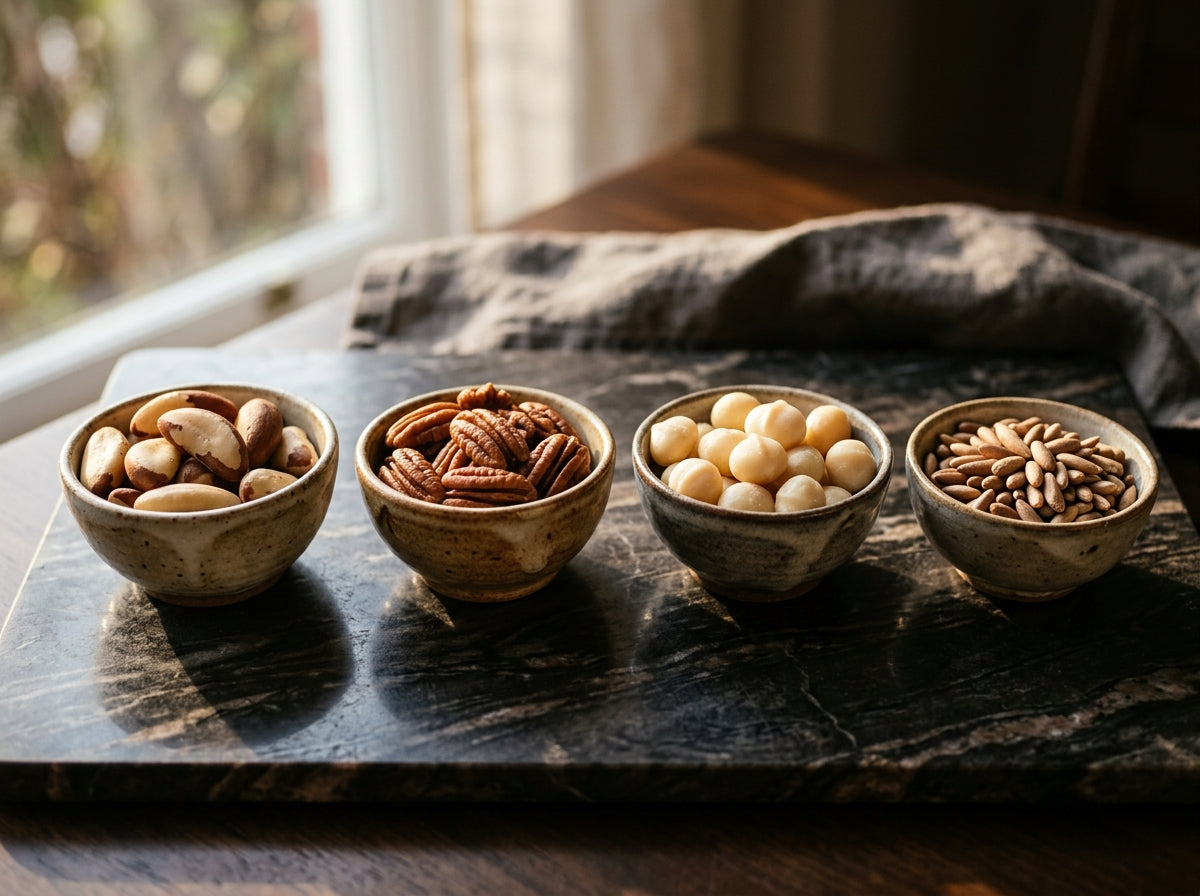
Brazil nuts, pecans, macadamia, or pine nuts? Compare 4 exotic nut varieties by taste, nutrition & daily serving size — find the right premium nut for your table.
Shop This Article
The products behind these numbers

ब्राजील नट्स, ब्राज़ीलियन - सेलेनियम से भरपूर
250 ग्राम

पेकन, अमेरिकन – स्वस्थ वसा से भरपूर
250 ग्राम

चिलगोजा गिरी, ताज़ी फसल, भारतीय - प्रोटीन से भरपूर
250 ग्राम
Nutrition
What the Numbers Say
Nutritional values are approximate. Source: NIN/ICMR. AI-assisted content — verify with a registered nutritionist before acting on this information.
Frequently Asked Questions
Which exotic nut is healthiest?
Each of the four exotic nuts in this guide has a different nutritional strength. Brazil nuts stand out for selenium. Pecans and macadamia nuts are rich in monounsaturated fats, which research associates with heart health as part of a balanced diet. Pine nuts (chilgoza) are valued in traditional Indian cooking. There is no single ‘healthiest’ choice — the best exotic nut is the one you enjoy and eat in reasonable amounts.
How many Brazil nuts can I eat a day?
Nutritionists commonly suggest 1 to 3 Brazil nuts a day. This is because Brazil nuts are extraordinarily rich in selenium — one nut alone provides more than a full day's selenium for most adults. Eating a large handful regularly may lead to selenium excess over time. Treat them as a powerful garnish, not a regular snack.
Are macadamia nuts good for you?
Macadamia nuts are high in monounsaturated fats, which research associates with healthier cholesterol levels when part of a balanced diet. They are calorie-dense — about 200 kcal per 28g — so a portion of 10 to 12 nuts a day is a reasonable amount. They contain no cholesterol and are low in carbohydrates, which many people find useful.
How should I store exotic nuts at home?
Store all exotic nuts in an airtight container (glass or steel) in a cool, dry place away from direct sunlight. Check the best-before date on your pack and consume within 30 days of opening. Pine nuts and macadamia nuts are especially sensitive to heat and humidity — a cool kitchen cupboard or fridge works best for them.
Sources
- USDA FoodData Central. (2019). Brazil nuts, dried, unblanched. FDC ID 170569. U.S. Department of Agriculture. Retrieved September 2026.
- USDA FoodData Central. (2019). Nuts, pecans. FDC ID 170182. U.S. Department of Agriculture. Retrieved September 2026.
- USDA FoodData Central. (2019). Nuts, macadamia nuts, raw. FDC ID 170178. U.S. Department of Agriculture. Retrieved September 2026.
- USDA FoodData Central. (2019). Nuts, pine nuts, dried. FDC ID 170181. U.S. Department of Agriculture. Retrieved September 2026.
- WHO/FAO Expert Consultation. (2010). Fats and Fatty Acids in Human Nutrition: Report of an Expert Consultation. FAO Food and Nutrition Paper 91. FAO, Rome.
Not medical advice — consult a healthcare professional for personal health decisions. This article is for general information only and is not a substitute for advice from a qualified dietitian or doctor. Nutritional values are from USDA FoodData Central and may vary by variety, origin, and growing conditions. % Daily Values are based on U.S. FDA 2018 reference intakes; Indian RDA figures per ICMR-NIN 2020 may differ. Brazil nuts are very high in selenium — do not exceed 1 to 3 nuts per day without consulting a health professional.
Where to Find Premium Dry Fruits Near You
Since 1939, Sindhi Dry Fruits has been supplying premium cashews, almonds, walnuts, pistachios and seasonal dry fruits to homes across Delhi, Mumbai, Bangalore and beyond. Order online with fast dispatch to Delhi NCR and pan-India delivery.